“Ọwọ́ ni ń fọ aṣọ mọ́” (It is the hand that truly washes a cloth clean)


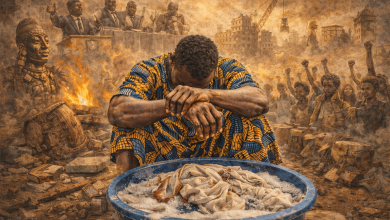
Growing up, my mother loved having me beside her whenever she washed clothes. Saturdays were reserved for that mountainous task back in the day; buckets lined up, soap carefully rationed, patience stretched. As she worked, she sang—soft, steady, unbroken. But whenever she noticed I was being wasteful with the soap, pouring as though abundance alone could do the work, she would pause, purse her lips, and say:
“Ọwọ́ ni ń fọ aṣọ mọ́, kì í ṣe ọṣẹ́.” I never enjoyed hearing it. But now, decades later, I finally understand. My mother was not merely correcting a child; she was transmitting a philosophy.
Soap helps, yes, but soap does not scrub itself. Without the discipline of the hand, without pressure, persistence, and direction, the cloth remains stained. That proverb is not about laundry. It is about life. It is about nations. It is about destiny.
Nothing truly gets done without work. Progress is never a gift of wishes; it is the reward of labor guided by wisdom. No civilization rises by prayer alone, nor by borrowed dreams, nor by the illusion of shortcuts. Civilizations rise when a people accept the dignity of effort and commit themselves to a guiding philosophy strong enough to sustain long work.
“Ọwọ́ ni ń fọ aṣọ mọ́.” This proverb teaches the integrity of labor, the necessity of intentionality, and the certainty of results. It reminds us that effort, when aligned with purpose, always leaves a mark. It assures us that work is not wasted, that the hand that commits itself will eventually see cleanliness, clarity, and order.
This is why Ìṣẹ̀ṣe is not a religion in the narrow sense of the word. It is a life’s work. A daily discipline. A continuous alignment between thought, action, and consequence. It does not promise escape from labor; it sanctifies it. It does not glorify laziness; it demands responsibility. It does not sell miracles; it builds character.
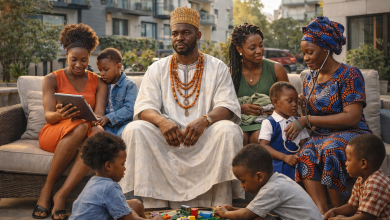
I dream—truly dream—of a land we can proudly call ours. A nation bound not merely by borders, but by shared values. A people with a common language of the spirit, where mother tongues rise again to become the living voice of the children of the soil. A place of abundance, not because resources fell from the sky, but because hands learned again how to work together.
A nation where wisdom becomes the wealth of elders, and strength the richness of the youth.
A land where poverty is not normalized, where envy is unnecessary, where dignity is not imported.
A mother-nation that nourishes all she births, rather than devouring her own children.
This is the nation where “Ọwọ́ ni ń fọ aṣọ mọ́” becomes a national maxim, not as a slogan, but as a lived ethic. A land of thinking hands and working minds. A people who understand that no one will clean their cloth for them. A people who accept that history does not change itself: hands must touch it.
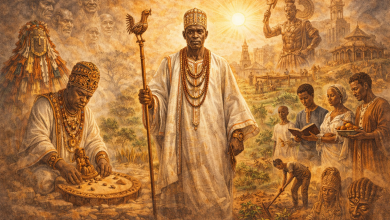
This is the land of the rising sun. The place where light does not hoard itself but spreads outward to the world.
The place where Odùduwà reigned not by magic, but by order, discipline, and vision.
Soap may foam. Words may inspire. Prayers may comfort.
But in the end, it is the hand, trained, disciplined, and committed—that washes the cloth clean.
And if we are willing to put our hands back to work,
our story can still be cleansed.

ABOUT US
Welcome to AFROFILM HERALD TIMES LIMITED, a premier media and entertainment company committed to celebrating and promoting the richness of African culture through storytelling. Our mission is to amplify African voices, preserve our heritage, and share authentic narratives with the world.
At AFROFILM HERALD TIMES LIMITED, we specialize in filmmaking, documentary production, content creation, and online entertainment journalism. Through visually compelling films, thought-provoking documentaries, and engaging digital content, we capture the essence of Africa’s past, present, and future.
Our passion lies in showcasing Africa’s diverse traditions, histories, and contemporary experiences in ways that inspire, educate, and entertain. With a deep appreciation for our roots and a forward-thinking approach, we strive to be a leading force in African media, bringing compelling stories to both local and global audiences.
We welcome and appreciate voluntary donations to support our administrative upkeep and continue our mission of cultural storytelling. To contribute, please reach out to us via +234 807 4441 391 (Available on WhatsApp).
Join us in our journey to redefine African storytelling and preserve our cultural legacy through the power of media and entertainment.