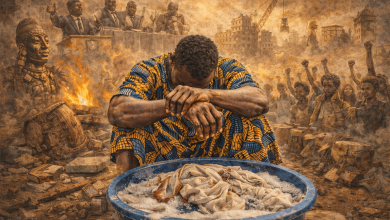
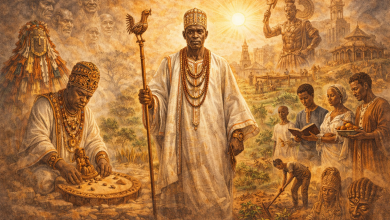
We must be careful not to judge ancient African wisdom with borrowed eyes. Many of the things we now reject with moral outrage were once carefully thought-out systems, designed not for pleasure, but for balance; not for indulgence, but for survival, continuity, and order.
Polygamy, in its African ancestral context, was never a chaotic expression of desire. It was not a license for irresponsibility. It was a social arrangement, rooted in duty, discipline, and communal accountability. Those who speak of it today often forget that Africa did not organize life around romance; it organized life around responsibility.

In ancient African societies, a man who took more than one wife was not celebrated, he was tested. Polygamy was not a right; it was a burden. To take multiple wives was to accept multiplied responsibility: more mouths to feed, more emotions to manage, more children to raise, more character to display. Any man who failed at this was not admired; he was disgraced.
This is why polygamy functioned as a moral filter. Only those with proven capacity—economic, emotional, and spiritual—were permitted to practice it. It was not hidden from the community. Elders watched. Women spoke. Lineages intervened. There was oversight, not secrecy.
Polygamy also served as a structure of care. In a world shaped by war, migration, disease, and dangerous labor, women were often left widowed, and children vulnerable. Polygamy absorbed the broken into the whole. No woman was meant to stand alone. No child was meant to grow without a roof, a name, and a future. This was not sentiment—it was justice.
Within these households, women were not reduced to uniform roles. African wisdom recognized that no two women are the same. One may be a trader, another a farmer, another a healer, another a spiritual anchor. Polygamy allowed feminine intelligence to express itself in plurality, not confinement. Cooperation was valued above rivalry, and character was the currency of respect.
Among the Yorùbá especially, ìwà—character—was the ultimate law. A household without good character, whether monogamous or polygamous, was already considered broken. Numbers never guaranteed harmony. Wisdom did.
Children raised within these structures did not belong to one fragile unit; they belonged to the compound, the lineage, the ancestors. Many mothers, many hands, many voices shaped them. This produced resilience, identity, and continuity—things modern society now desperately seeks after dismantling communal life.
What collapsed polygamy was not its design, but the collapse of the values that sustained it. Colonial disruption, economic dislocation, and imported religious absolutism stripped African institutions of their ethical spine, then condemned the hollow shell that remained. A system uprooted from its philosophy will always look barbaric.
This must be said without fear: Africa did not design institutions to please the world. Africa designed institutions to work.
Polygamy was never about excess. It was about capacity. Never about domination. But about duty.
Whether practiced today or not is a separate conversation. But to understand ourselves, we must stop insulting the intelligence of our ancestors. A people who abandon the logic of their own wisdom will always struggle to build anything lasting.
Before we reject, we must first remember.

ABOUT US
Welcome to AFROFILM HERALD TIMES LIMITED, a premier media and entertainment company committed to celebrating and promoting the richness of African culture through storytelling. Our mission is to amplify African voices, preserve our heritage, and share authentic narratives with the world.
At AFROFILM HERALD TIMES LIMITED, we specialize in filmmaking, documentary production, content creation, and online entertainment journalism. Through visually compelling films, thought-provoking documentaries, and engaging digital content, we capture the essence of Africa’s past, present, and future.
Our passion lies in showcasing Africa’s diverse traditions, histories, and contemporary experiences in ways that inspire, educate, and entertain. With a deep appreciation for our roots and a forward-thinking approach, we strive to be a leading force in African media, bringing compelling stories to both local and global audiences.
We welcome and appreciate voluntary donations to support our administrative upkeep and continue our mission of cultural storytelling. To contribute, please reach out to us via +234 807 4441 391 (Available on WhatsApp).
Join us in our journey to redefine African storytelling and preserve our cultural legacy through the power of media and entertainment.