By OLUWANBEPELUMI A. Pelumi-Folarin
And now, we take the next journey to the village square.
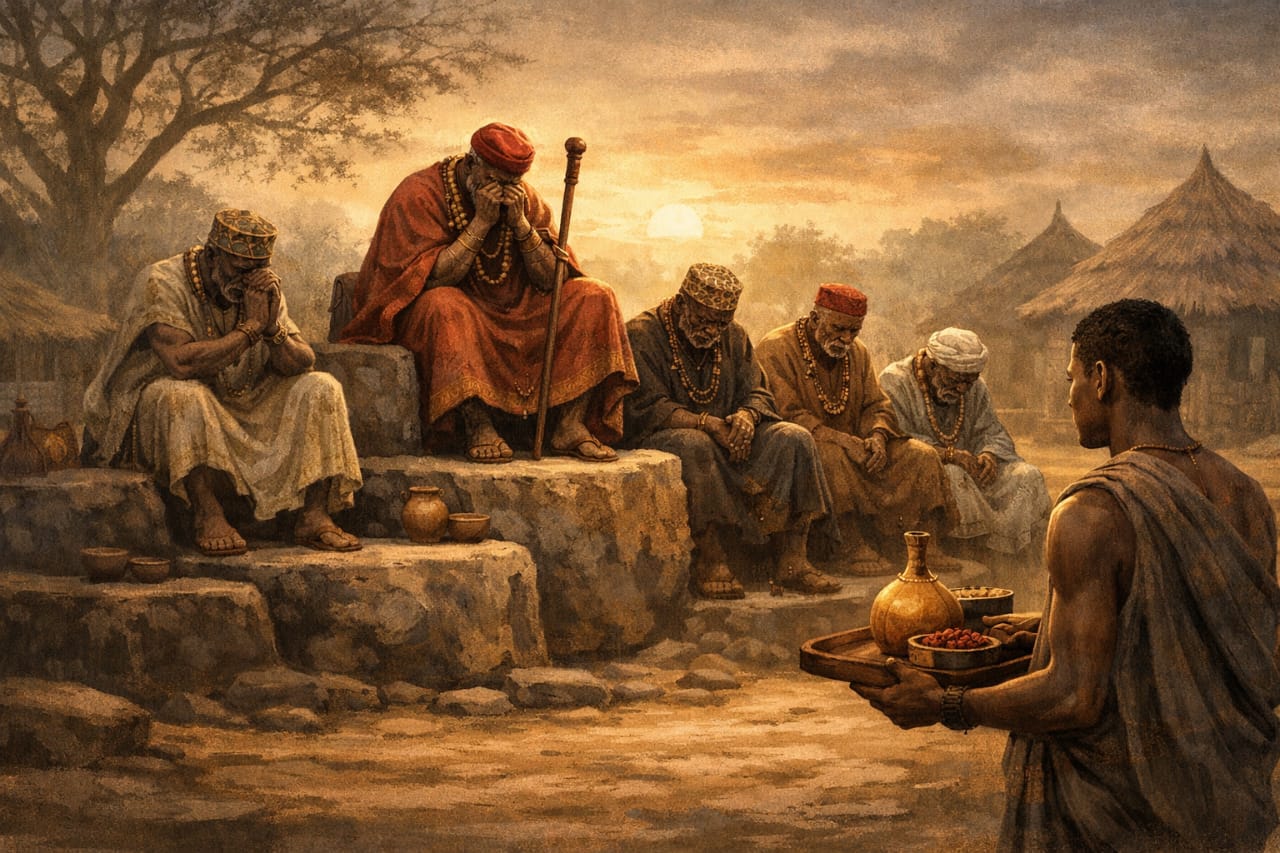
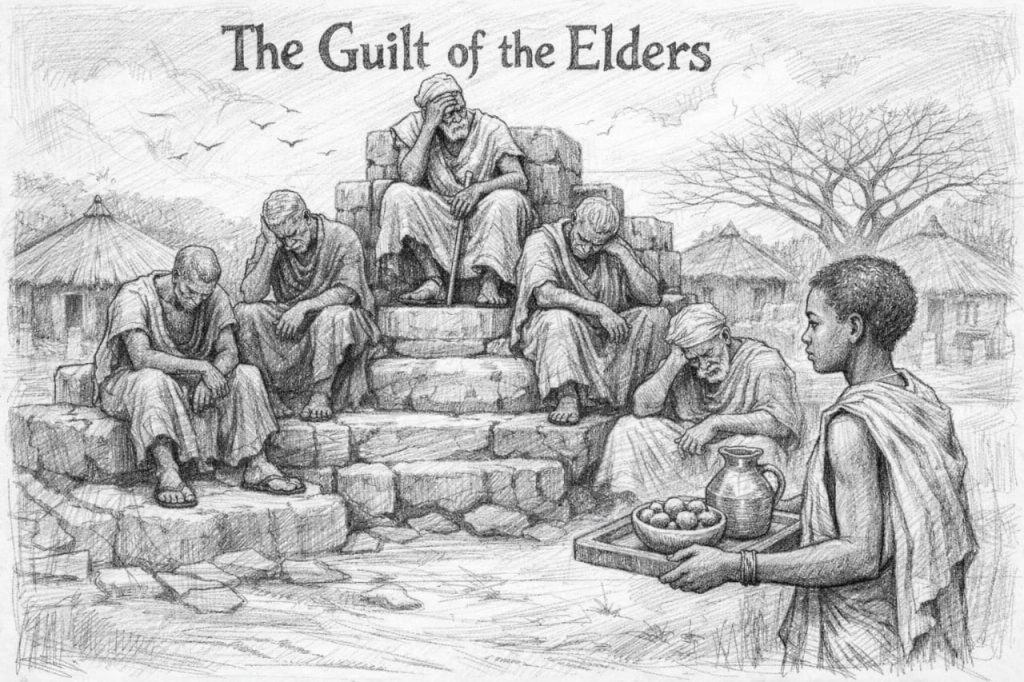
There, the elders are seated upon elevated stones, each stone marking a rank, a responsibility, a hierarchy of wisdom. The one who sits on the highest stone is doubly honored, not by birth alone, but by the weight of insight he is believed to carry. Among our people, no child is permitted to gather in the presence of such elders and chiefs. Their space is sacred. Their words shape destinies.
Yet I was brought in, not to sit, but to serve.
I was tasked with offering them their favorite local wine and kola. It was not a casual assignment. It was a call to service, a privilege. In my community, only one trusted by the collective wisdom of the elders could occupy such a position. Many young men dreamed of being chosen, for to serve was to be seen, and to be seen was to be acknowledged.
Their meetings were usually marked by laughter, debate, and celebration. But this particular gathering was different.
The air was heavy. Heads were bowed. Voices were low. I was instructed to stand at a respectful distance, but close enough to hear if necessary. Though I knew I ought not to listen, curiosity, and perhaps destiny, compelled me.
What I heard changed me.
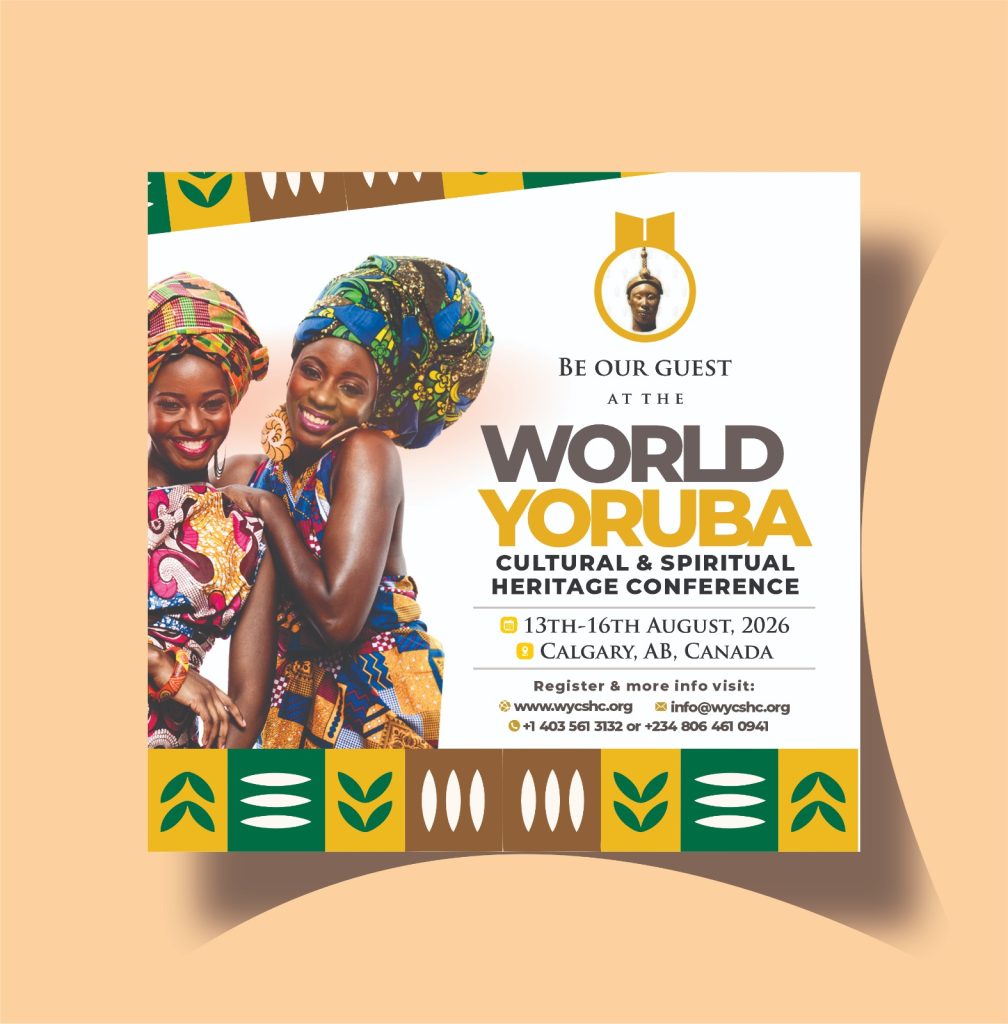
Click to register for World Yoruba Cultural and Spiritual Heritage Conference
They spoke not of victory, nor of tradition preserved, nor of a future secured. They spoke of regret. Each elder, in his own words, confessed the same burden: we allowed our culture to be eroded. We failed to build an educational structure rooted in our own philosophical soil; one that could have allowed our land to thrive in its most organic and dignified form.
They lamented the present condition of our society: the corruption, the poverty, the moral disintegration, the many shades of modern evil that now define our public life. And with painful honesty, they named the source, not foreign powers alone, but their own complicity. These, they said, were the seeds of our greed, our silence, our surrender.
As I stood there, offering wine with trembling hands, their sorrow overcame me. For in that moment, I realized the depth of our betrayal, not by strangers, but by our own people. The men we were taught to call fathers.
Click to register for World Yoruba Cultural and Spiritual Heritage Conference
That night, I understood something with terrifying clarity: nations do not always fall by invasion. Sometimes they are quietly handed over by those entrusted to guard them.
Now, the burden has shifted to us.
It is our turn to recreate, to reimagine, to rebuild from the ground up. We must rescue a nation that has been constructed upon borrowed foundations—on lies dressed as progress and falsehoods baptized as truth. I do not know how long this restoration will take. But I know this: the twin systems that have come to dominate our consciousness—Christianity and Islam—have functioned not merely as religions, but as instruments within a larger structure that has normalized poverty, dependency, and spiritual amnesia in our land.
These systems did not merely replace belief; they displaced identity.
Click to register for World Yoruba Cultural and Spiritual Heritage Conference
Our spirituality, our ancestral metaphysics, our cosmology, our moral architecture was deliberately relegated. Not because it was inferior, but because it was powerful. The architects of this corrupt order understood a dangerous truth: evil can only thrive in Africa when Africans are severed from their spiritual center. A people disconnected from their metaphysical roots become easy to govern, easy to divide, easy to exploit.
The first and most enduring propaganda against Africans was not military—it was spiritual. It was the fabrication of falsehoods about our ancestors, our traditions, our systems of knowing. What was sacred was labeled primitive. What was profound was called superstition. What was sovereign was declared obsolete.
And we believed it.
But we are beginning to see through the lies.
We are beginning to remember.
We are beginning to awaken.
This generation must refuse to inherit guilt as destiny. We must not pass the burden of the elders onto our own children. We must break the cycle of spiritual dispossession and rebuild our world upon the wisdom that once ordered our societies, disciplined our leaders, and aligned our lives with the deeper laws of existence.
Click to register for World Yoruba Cultural and Spiritual Heritage Conference
The guilt of the elders is now our warning.
Our response must be restoration.
Our task is not imitation—but reclamation.
For a people who recover their spiritual center recover their future.
And we must not fail again.

ABOUT US
Welcome to AFROFILM HERALD TIMES LIMITED, a premier media and entertainment company committed to celebrating and promoting the richness of African culture through storytelling. Our mission is to amplify African voices, preserve our heritage, and share authentic narratives with the world.
At AFROFILM HERALD TIMES LIMITED, we specialize in filmmaking, documentary production, content creation, and online entertainment journalism. Through visually compelling films, thought-provoking documentaries, and engaging digital content, we capture the essence of Africa’s past, present, and future.
Our passion lies in showcasing Africa’s diverse traditions, histories, and contemporary experiences in ways that inspire, educate, and entertain. With a deep appreciation for our roots and a forward-thinking approach, we strive to be a leading force in African media, bringing compelling stories to both local and global audiences.
We welcome and appreciate voluntary donations to support our administrative upkeep and continue our mission of cultural storytelling. To contribute, please reach out to us via +234 807 4441 391 (Available on WhatsApp).
Join us in our journey to redefine African storytelling and preserve our cultural legacy through the power of media and entertainment.