There is a moment in every people’s history when the problem is no longer ignorance, but avoidance. When the wisdom has already been spoken, preserved in proverbs, sung by mothers, encoded in rituals, yet the hands refuse to act. This is where we now stand.
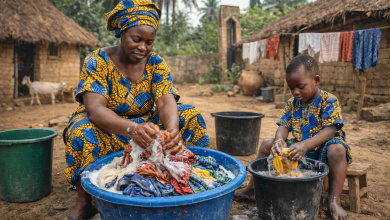
“Ọwọ́ ni ń fọ aṣọ mọ́.” [The hand washes the cloth clean]
But what happens when the hand is folded? What happens when it waits for soap to become magic, for water to do the scrubbing, for another person to do the work meant for it?

We have mastered the language of complaint. We describe our stains in great detail. We analyze the dirt, trace its history, name who spilled it and when. Yet we hesitate at the basin. We debate the temperature of the water. We argue about the brand of soap. All the while, the cloth remains dirty.
This is the tragedy of a spiritually displaced people. Our ancestors did not confuse knowledge with action. To know was to be responsible. Wisdom was never an ornament; it was a burden one carried into work. Among them, a proverb was not spoken to sound clever, it was spoken to move hands into motion.
Today, we speak proverbs and sit still. We attend conferences on culture but refuse the discipline of culture. We chant about identity while outsourcing labor, leadership, and imagination. We desire clean garments but reject the soreness that comes from scrubbing. And so, we inherit a paradox: a people rich in wisdom yet poor in results.
The truth must be said without apology: No amount of spiritual nostalgia will wash the cloth. No borrowed ideology will scrub our stains. No foreign system will do the work of our hands for us.
The same hands that abandoned responsibility now beg for miracles. But miracles, in our cosmology, were never replacements for effort, they were accelerations of obedience. Even the Òrìṣà respond to motion. Stagnation is not sacred.
When hands refuse to work, decay becomes policy. Corruption thrives. Mediocrity becomes normal. Leadership turns theatrical. The youth grow angry, not because they lack strength, but because they have inherited a society allergic to effort and accountability.
Yet the proverb still stands, unmoved, unashamed. Ọwọ́ ni ń fọ aṣọ mọ́. It does not beg us to believe. It waits for us to act.
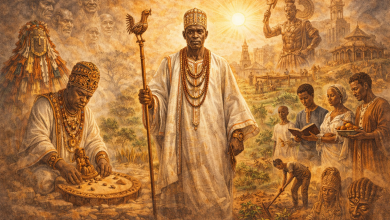
The work before us is not small. It is generational. It demands rebuilding education from the ground of relevance, not imitation. Leadership from the soil of character, not charisma. Institutions from ancestral philosophy, not colonial convenience. None of this will happen by slogans. All of it will happen by hands, trained hands, honest hands, patient hands.
A clean cloth is never accidental. A dignified nation is never lucky. If we truly desire renewal, we must stop asking who will save us and begin asking what our hands are doing. History is watching, not our mouths, but our movements.
The basin is already filled. The cloth is already stained. The proverb has already spoken. All that remains is the hand.

ABOUT US
Welcome to AFROFILM HERALD TIMES LIMITED, a premier media and entertainment company committed to celebrating and promoting the richness of African culture through storytelling. Our mission is to amplify African voices, preserve our heritage, and share authentic narratives with the world.
At AFROFILM HERALD TIMES LIMITED, we specialize in filmmaking, documentary production, content creation, and online entertainment journalism. Through visually compelling films, thought-provoking documentaries, and engaging digital content, we capture the essence of Africa’s past, present, and future.
Our passion lies in showcasing Africa’s diverse traditions, histories, and contemporary experiences in ways that inspire, educate, and entertain. With a deep appreciation for our roots and a forward-thinking approach, we strive to be a leading force in African media, bringing compelling stories to both local and global audiences.
We welcome and appreciate voluntary donations to support our administrative upkeep and continue our mission of cultural storytelling. To contribute, please reach out to us via +234 807 4441 391 (Available on WhatsApp).
Join us in our journey to redefine African storytelling and preserve our cultural legacy through the power of media and entertainment.